Ballast water exchange: the basics
Plain-English basics of ballast water exchange at sea under the BWM Convention: where, how much, the two methods, and keeping stress and stability in limits.
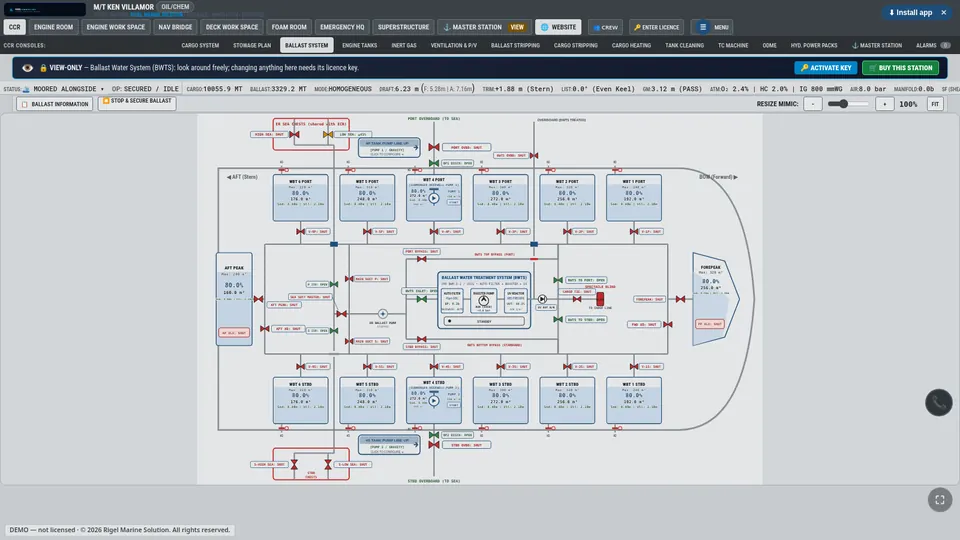
Ballast water carries small sea life from one port to another. The Ballast Water Management (BWM) Convention controls that. Many ships now treat ballast with a treatment system (the D-2 standard). Exchange at sea (the D-1 standard) is still used where it is allowed, and it is a good exercise in ship stability.
Where
Where possible, at least 200 nautical miles from the nearest land, in water at least 200 m deep. If that is not possible, at least 50 nm from land, still in 200 m of water. Some port states have their own rules, so check before the voyage.
How much
The aim is to exchange at least 95 % of the volume of each tank. Two methods are common:
- Sequential: empty a tank, then refill it with ocean water.
- Flow-through (pumping through): pump in at the bottom and let water flow out at the top. Pumping three times the tank volume counts as meeting the 95 % standard.
Stay inside the limits
Exchange changes the ship while she is at sea. Plan the order of tanks so that at every step:
- shear force and bending moment stay within the allowed values;
- stability (GM) stays above the minimum;
- draft forward, propeller immersion and bridge visibility stay acceptable;
- partly filled tanks do not slosh in a seaway.
Follow the ship's approved Ballast Water Management Plan, and write every operation in the Ballast Water Record Book.
Practise it in the simulator
Try this on the M/T KEN VILLAMOR tanker simulator, in your browser or on the Windows app.
Open the simulatorMore posts
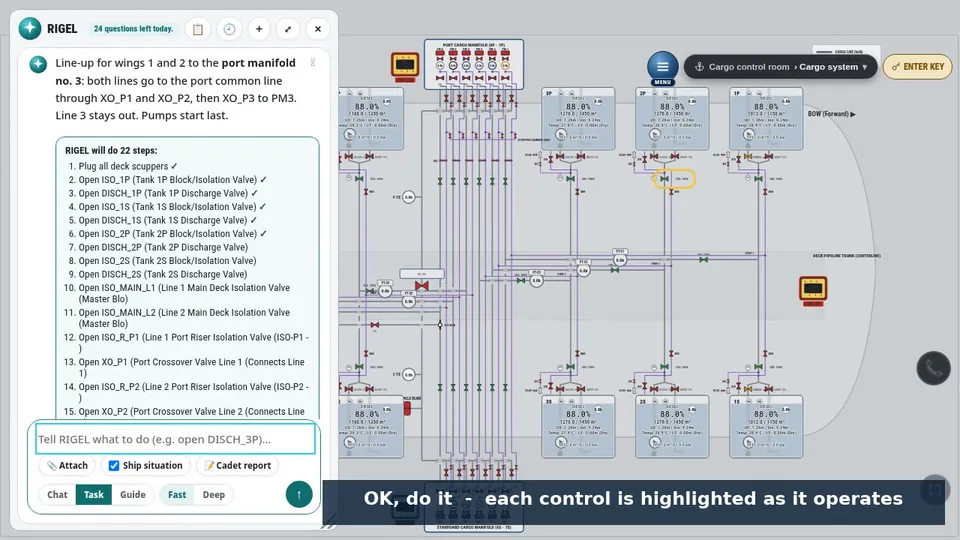
RIGEL: an instructor inside the simulator
Give RIGEL a task, let it teach you step by step, or ask it questions. How Task, Guide and Chat mode work in the M/T KEN VILLAMOR simulator.
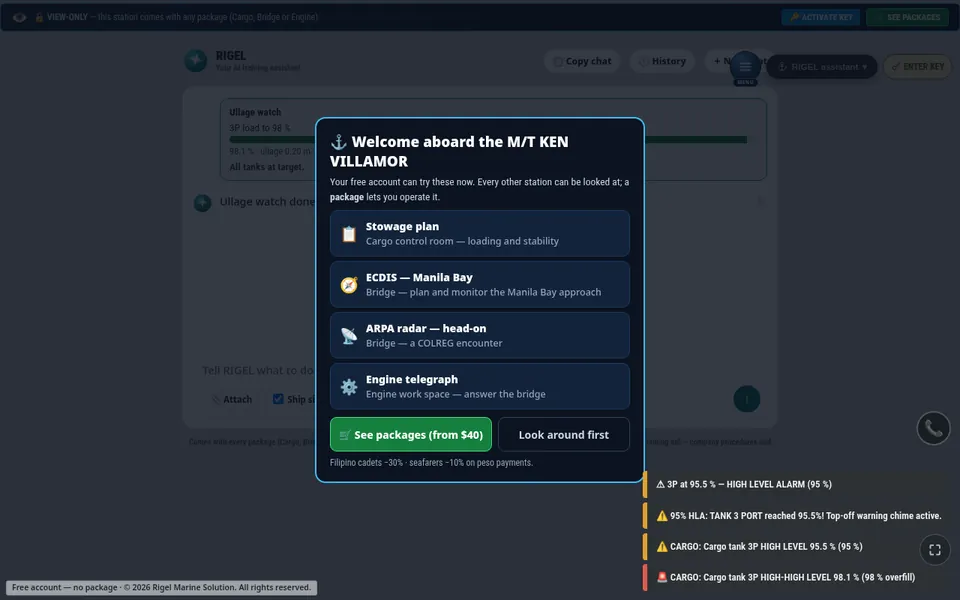
New in the simulator: RIGEL ullage watch
RIGEL can now watch a cargo tank while it loads or discharges to a target level, throttle near the top and shut the valve at the target.