The IGS deck seal: what it does and what to watch
Why the inert gas deck water seal matters, how it stops gas flowing back to the engine room, and the checks to make on every watch.
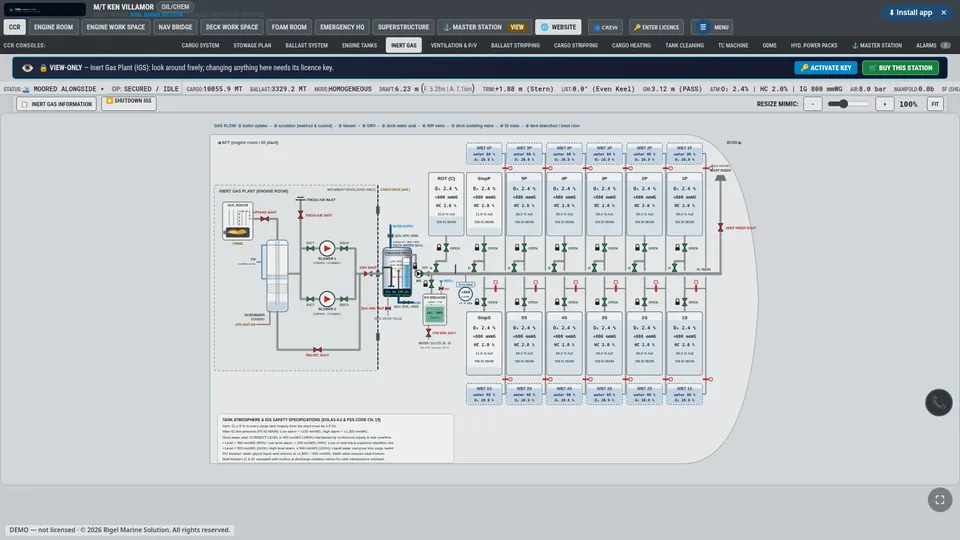
The inert gas (IG) plant is in or near the machinery spaces. The cargo tanks are full of hydrocarbon gas. Something must stop that gas from flowing back the wrong way when the IG plant stops or the pressure drops. That job falls to the deck water seal, together with a non-return valve. SOLAS asks for at least two non-return devices, and one of them is the deck seal.
How it works
Inert gas goes out to the deck through water. When gas tries to come back, the water closes the path. There are three common types: wet, semi-dry and dry. In all of them the seal only works if the water is there.
What to check
- Water level. Check the level and the low-level alarm. A seal that has lost its water is not a seal.
- Water supply. The sea water supply to the seal must be running whenever the plant is in use.
- Cold weather. The seal and its drains can freeze. Check that the heating works where fitted.
- Carry-over. Too much water carried into the IG main can make trouble downstream. Check the demister and drains.
The pressure side
Keep the deck main pressure positive. The P/V breaker is the last protection against too much pressure or vacuum in the main. It should not be blowing in normal use. If it does, find out why before carrying on.
In the simulator you can see the deck seal level and the P/V breaker on the IGS page, and an instructor can inject faults such as a lost seal so you can practise the response.
Practise it in the simulator
Try this on the M/T KEN VILLAMOR tanker simulator, in your browser or on the Windows app.
Open the simulatorMore posts
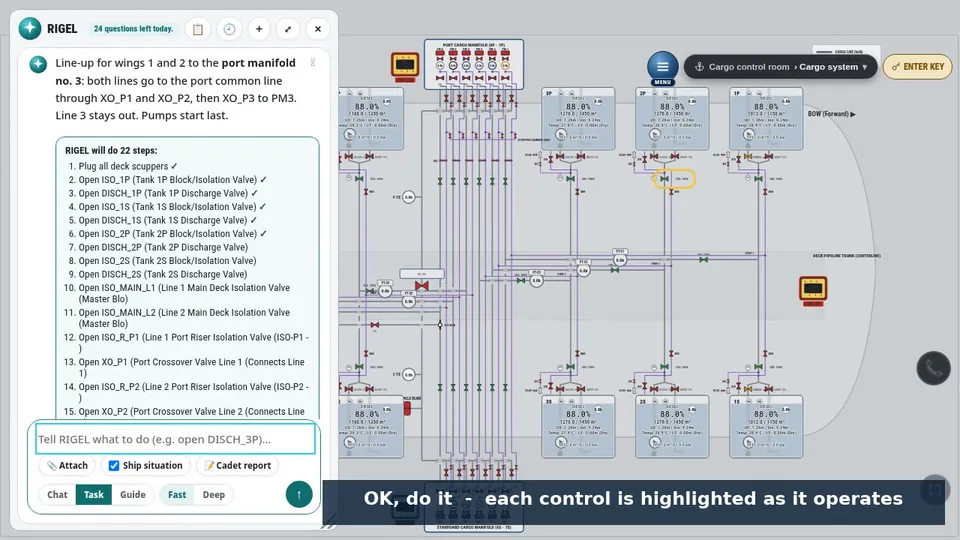
RIGEL: an instructor inside the simulator
Give RIGEL a task, let it teach you step by step, or ask it questions. How Task, Guide and Chat mode work in the M/T KEN VILLAMOR simulator.
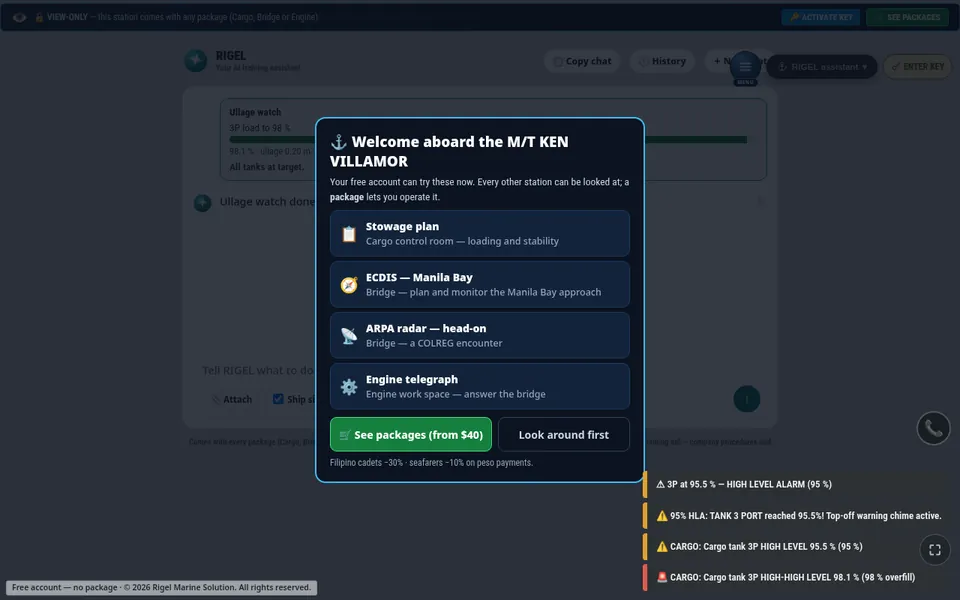
New in the simulator: RIGEL ullage watch
RIGEL can now watch a cargo tank while it loads or discharges to a target level, throttle near the top and shut the valve at the target.