Tank cleaning: the O2 and HC checks before washing
What to measure in a cargo tank before tank washing and gas freeing, and why the oxygen and hydrocarbon readings matter.
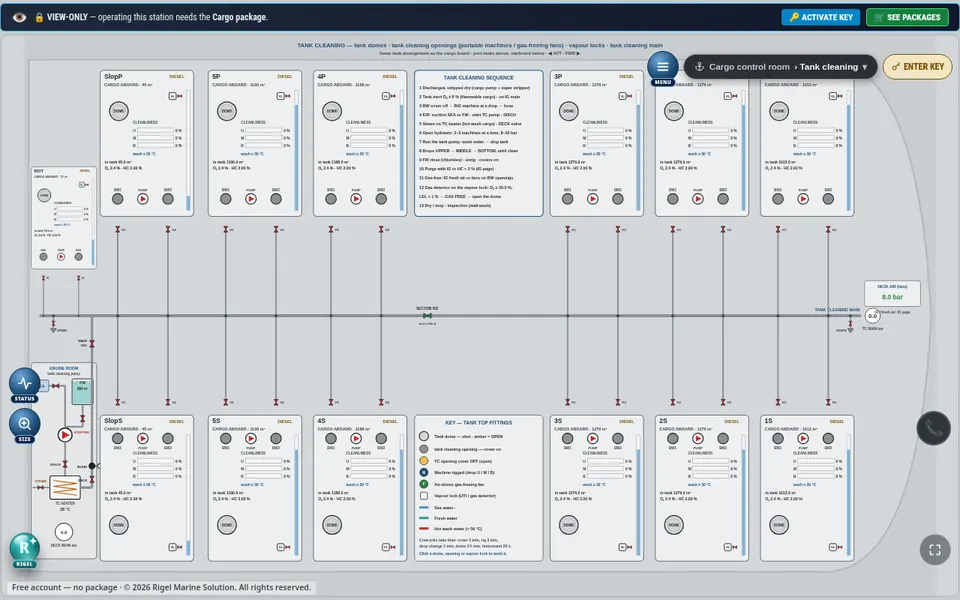
Washing a tank that holds hydrocarbon gas makes static and mist. That is why the atmosphere in the tank must be right before the machines go in. Two readings decide it: oxygen (O2) and hydrocarbon gas (HC).
Washing in an inerted tank
On a ship with inert gas, the tank stays inerted during washing. The rule from SOLAS and ISGOTT is simple: O2 not more than 8 % by volume in the tank, with positive pressure kept by the IG system. If the O2 goes above 8 %, stop washing and bring it back down.
- Measure at more than one depth (for example upper, middle and lower), not only near the hatch.
- Use a meter that is calibrated and checked before use.
- Write the readings down with the time.
Purging before gas freeing
After washing, you replace the hydrocarbon gas with inert gas (purging) before letting air in. Purge until the HC is below about 2 % by volume, measured with an instrument made for inert atmospheres. When air is then added, the mixture should not pass through the flammable range.
Gas free for entry is a different test
Gas freeing makes the tank safe to enter. That needs a separate set of readings: 21 % oxygen, no flammable gas (a very low % of the lower flammable limit), and toxic gases below their limits. Entry is then under a permit to work. Your company procedure and the ship's SMS set the exact limits.
Key points
O2 ≤ 8 % before and during washing in an inerted tank. HC below about 2 % before letting air in. Full entry readings and a permit before anyone goes inside.
Practise it in the simulator
Try this on the M/T KEN VILLAMOR tanker simulator, in your browser or on the Windows app.
Open the simulatorMore posts
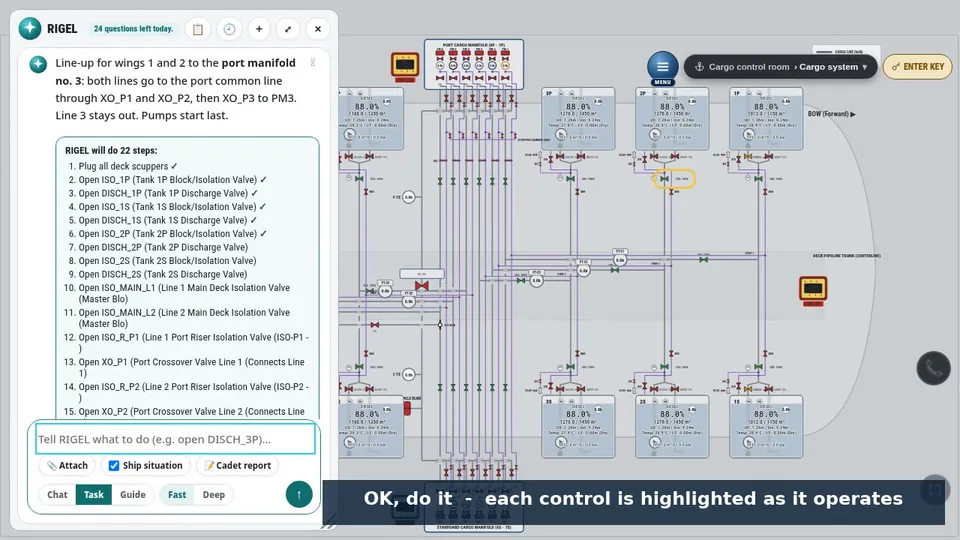
RIGEL: an instructor inside the simulator
Give RIGEL a task, let it teach you step by step, or ask it questions. How Task, Guide and Chat mode work in the M/T KEN VILLAMOR simulator.
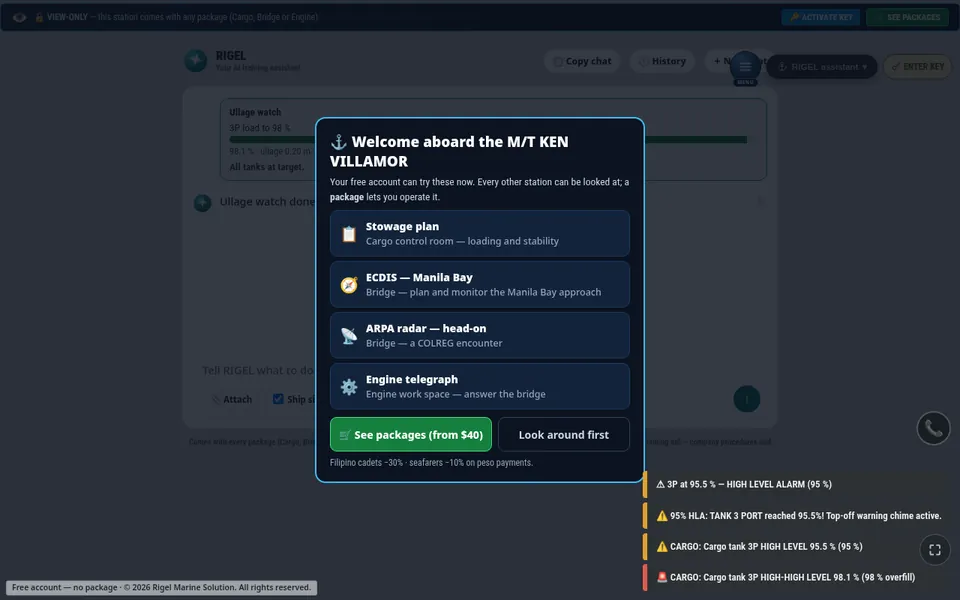
New in the simulator: RIGEL ullage watch
RIGEL can now watch a cargo tank while it loads or discharges to a target level, throttle near the top and shut the valve at the target.